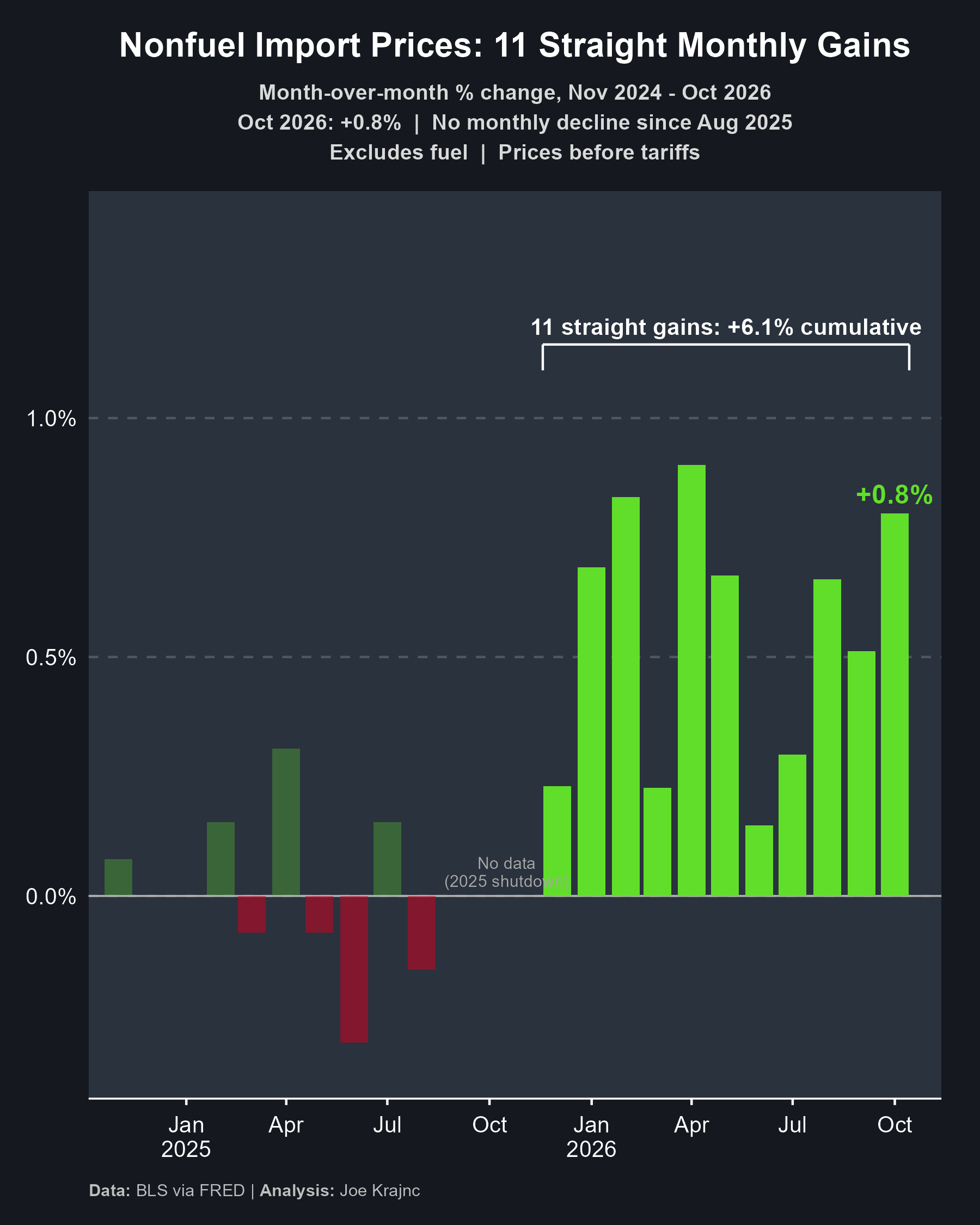
The latest import price report came out this morning, and one number jumped out at me: nonfuel import prices rose 0.8% in October. That’s 11 months in a row.
What are import prices?
Every month, the Bureau of Labor Statistics tracks what U.S. buyers pay for goods coming in from other countries. “Nonfuel” means oil and gas are stripped out, leaving everything else – electronics, appliances, furniture, auto parts, building materials, equipment.Flat last year, rising ever since
Through most of 2025, these prices barely moved. A little up, a little down, basically flat. Then late last year they turned, and they haven’t had a down month since.This isn’t oil
Headline import prices bounce around with gas prices, which makes them hard to read. Pulling fuel out gives a cleaner picture, and that picture shows the stuff we buy from overseas steadily creeping higher.This is before tariffs
BLS measures what foreign sellers are charging, before any tariffs are added. So tariffs aren’t what’s driving these numbers. Whatever tariffs apply come on top.What this could mean for housing
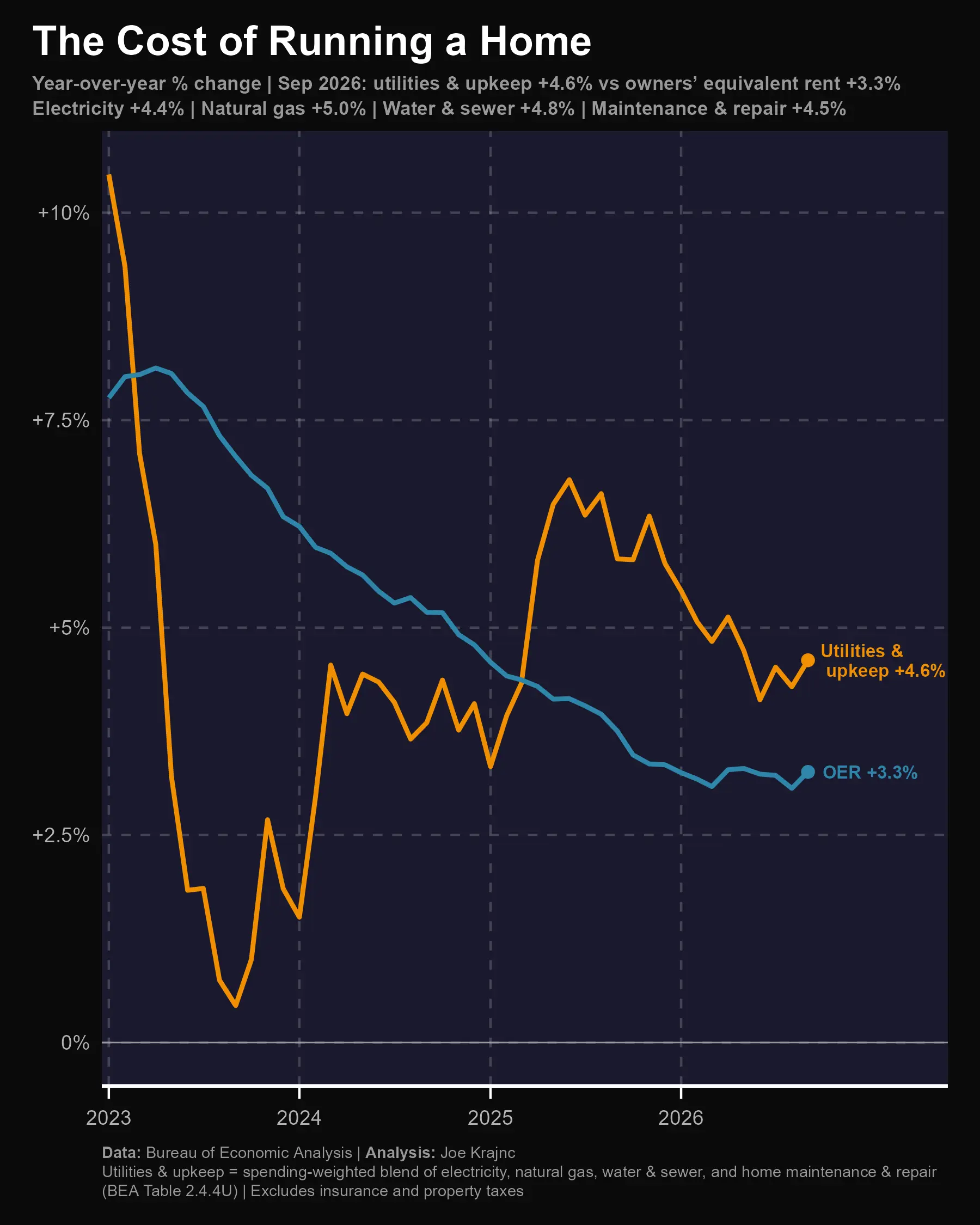
Import prices don’t hit home values directly, but they can reach housing in two ways:- Mortgage rates. If rising import costs keep inflation sticky, the Fed has less room to cut rates, and that can keep mortgage rates higher for longer. (Related: why housing inflation is the wrong number for homeowners.)
- Building costs. Lumber, fixtures, appliances and other materials often come from overseas. When those cost more, new homes cost more to build, and that tends to show up in new-construction pricing.
One month of data doesn’t change the market. But this is one of those early signals worth keeping an eye on if you’re planning to buy, sell or build in the next year.
Why it matters
What shows up at the border usually shows up on store shelves a few months later. Import prices are an early heads-up on where inflation may be headed, and I’ll keep watching this one in the months ahead.Have questions about how this affects your plans? Reach out – I’m always happy to talk through what the numbers mean for you. You can also join the conversation on LinkedIn.
Data: U.S. Bureau of Labor Statistics, Import/Export Price Indexes, via FRED. October 2025 data was never published because of the government shutdown, so the chart shows a gap there.